日美达成重大合作
首先,自媒体的功都能是什么?专事评论时事的自媒体,是在现有的新闻上做文章,自己广播給网民。如果只是传播中文,加上解释,那相关的时事得讲全、讲精确吧?这一篇,也是限于自媒体本人的知识,就要把新闻中的内容漏掉。 传播日美元首会谈的要旨中漏掉了什么?日本将在阿拉斯加开采石油以供亟需。自己加上的是”这回没提关税战“。这是自媒体者的“通病”,比比皆是。
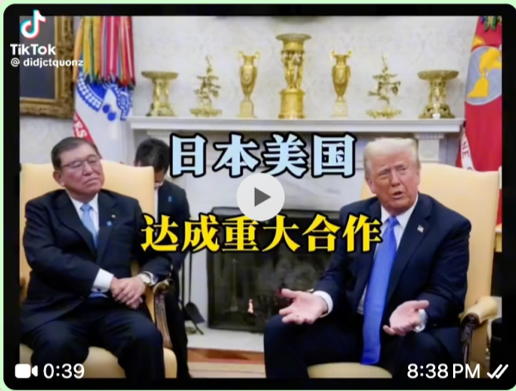
对国际事务发生智力低下的观察:人家说了什么,到他们的“中文翻唱”中就走音儿,没有新闻的真实性,更没有客观的观察,听他们解读什么呢:人家说的要紧的东西,被漏掉;再掺上自己的观点,又是错的。人家总统说了:对加墨中的这次加关税是为了告诫他们关于向美国走私毒品和非法移民的配合。他跟日本提哪门子的关税战呀?再说,这个会谈的结果成了解决两国的能源工业和资本互补,是为美国吸引工业投资,是为日本解决能源的出路。友好交易,不需要以关税威胁吧?
我看到的要点,是日本对美国的大规模投资,尤其是美国开放阿拉斯加的天然气开采和液化天然气运输,接受日本的相关巨额工程投资,专供出口日本。北美的天然气资源,日、德两国曾向加拿大建议投资多年都被回绝,但对两国都是求之不得。阿拉斯加的能源供应,将使日本摆脱从中东远途取得石油的能源依赖。这在美日之间是历史性的突破。
在美国新政的感召下,国际资金到美国本土大规模投入能源、制造业和高科技,还是从来没有过的第一次。这个不是“贸易战”。贸易战,中国已经大胜利40年了。只需关注的是:国际贸易终究只能靠“对等”来维持往来。对等,就是双方征同等的进口税,或双方都不征进口税,双方都尊重市场经济履行WTO那样的规则,双方民间往来政府不干预货币和进出口。所有的主权国家都有与中国相同的理由,但为了贸易的公平和键入,不得不达成协议,虽然WTO已经被搞垮了,太平洋沿岸重起炉灶的新贸易联盟就更是不再允许成员“承诺”、而要求必须实现具备了条件。就是各国从WTO取得的教训。
对中加墨的这次加关税。美国明确说了,是为了阻止毒品和非法移民的涌入,加墨都看懂了。 美国加关税,经济威胁在于是使加墨两地的制造业投资方都不得不迁去美国本土以求低成本。这是“制造业靠近市场”的基本降低成本和盈利原理。美国的挑战,是成为能源出口大国、制造业大国。并不是眼前的商品贸易问题:它仍是消费市场,只是联邦政府也需要对等、成比例地从进口商品得到关税的收入。
顺便:中国媒体为日本发动太平洋战争开脱,不是总说:那是不得已为了反抗美国对日本的石油供应“卡脖子”吗?它这回终于不卡日本的脖子了,还用自己的天然资源供日本开发。那这样的“变局”,对中国说明了什么呢?
M教授转:Can Trump with a trade war with China? by BBC
This one, a world major media, is also wrong.
Conventional industrial wisdom of cost-reduction is: production located close to the market.
China’s odd manufacture success, however, has been in a differebt “Trading” model, that even including transpacific shipping and logistics, the goods can still be much cheaper than local productions in North America. This is because Shipping costs, and related inter-continent logistics, have been compensated by (1) China government export incentive (tax exemptions, etc.) and , (2) US’ 0 import duty, plus (3) product rebates under green-energy programs in US. All US importers and distribution channels are miking profit from incentive programs of all kinds (like selling energy-saving LED lights has had up to a thousand different types of federal and state rebate programs in US). While in convention import, importers earn profits between COB (seller’s price to pay till loading the goods onboard) and MSRP (manufacture suggested retail price).
What Trump Administration is doing now is not the “trade war.” It is manufacturing war and energy war. Tariff is just a threat, threatening tariff to Nexico and Canada, makes China’s huge investments in manufacturing facilities there (in preparing to walk-around US tariff to China and take advantage of NAFTA, the North America Free Trade Agreement) wasted. US companies weighing trade-off and profits now start realizing that actually onshore US has manufacture cost advantages. Then the world investors start investing manufacture industries onshore US. Trump’s new policies are forcing Wall Street wealth not to invest offshore as much. This is the fundamental change internally in US. The “war” is to fight against itself, and its own so called allies who have also along China to taken advantages from US. US’s changes:
- Add duty on import goods as a tool, also encourage people to inport with diversified sources, so that US consumers get a better deal; also allow federal government to be tipped with a good finance benefit from importers.
- Incentives to industrial developers who invest and move manufactures onshore US.
- Domestically increase energy production, to lower domestic energy expenses, thus production costs and inflation, and increase its own energy power and gain independence from foreign powers in the world.
- Exiting from Paris Climate Accords, will kill US market demands and dependencies on eV, battery and solar energy products (Big-3 Weapons for China’s goal of Manufacturing Super Power) to concur the world, productions are already in surplus).
- Keep allowing small items (under $800-value per pack can be postal mailed into US from China) in mail-to-order retail market, to satisfy suckers-of-deals American consumers.
therefore what is China’s counter measure to above?
Very interestingly, China’s 拼多多 and 吸金 are currently selling at 1/5 – 1/10 of US retail stores’ prices including shipping and handling. Even close-down the postal mail duty-free allowance, with a 100% duty it is still times cheaper (for example: a cigarette liter selling in gas stations will become $2 from duty-free $.99. But who care about this price increase? And it will bring Federal government $1 of duty income). Cheap price still fulfills poor people .
US already exited from Universal Postal Union, due to its postage costs are too high for US’ outgoing and too low for incoming ones. US government compensate Postal Services too much toward bankrupt USPS. If the incoming US can unilaterally incrase postal packages’ cost, it would be a huge benefit to US.
By the way, that is why US’ source of federal finance should switch from income tax back on tariff. Otherwise US consumers get double taxed. Tariff should be reciprocally enforced. That should be the common customs of conduct in international trade. I just couldn’t understand why it is so hard to be accepted by Chinese.
If rich people who want and depend on luxury income goods, then they should pay, and would afford to pay, for more equivalent tax to contribute the government. For poor people, most life-necessity living materials are domestically produced anyway.
World investment trend is changing: US, Indian are up, UK flat, China down. Taiwan’s export to US has most increases in computers (200% increase) and micro chips (100% increase).
Please see the following charts, that Taiwan China media noticed, but Mainland China’s ignored:

from top to bottom: US, India, UK and China

 WORLD transformation
Leave a comment